University of Washington logo

Mary Gates Endowment for Students

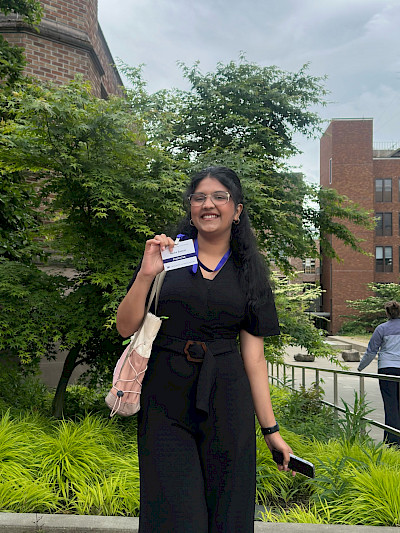
Photo of Sneha Bansal

Sneha Bansal

Mary Gates Research Scholar
Autumn 2025
Major: Neuroscience
Pronouns: she/her
Mentor: Dr. Benjamin Grannan, Neurological Surgery

Project

Neural Encoding of Auditory Rhythm in the Globus Pallidus internus

Parkinson’s Disease (PD) is a progressive neurological disorder characterized primarily by motor symptoms such as tremors, rigidity, and bradykinesia, but its effects extend far beyond basic movement difficulties. People with PD can experience difficulties processing timing and rhythmic patterns, and these changes may reflect disruptions in the brain networks that support both perception and movement. Deep brain stimulation (DBS) is an established treatment for certain motor symptoms, but researchers are still investigating precisely how it alters neural activity and how auditory rhythm processing relates to motor and language function. Understanding these relationships could ultimately help researchers develop approaches that better address movement and communication challenges in PD. The immediate goal of my project was to establish a reliable intraoperative system for presenting precisely timed auditory stimuli while recording high-quality neural data from the globus pallidus internus. The long term goal is to set the stage for future studies that can probe language, rhythm, and prediction in the brain with direct clinical relevance to improving DBS outcomes.

What I learned

Participating in this project was one of the most formative experiences of my undergraduate education. I gained hands-on experience across the research process, from generating hypotheses and programming auditory tasks to collecting and analyzing intraoperative neural data. The project allowed me to apply my newly-learned technical skills in a real clinical context, collaborate with researchers and clinicians and see the human impact of neuroscience research. This deep dive is invaluable as I move towards future graduate studies and a career in neuroscience research.

Advice for future applicants

I think that one of the scholarship’s greatest strengths is its emphasis on mentorship. I would advise future applicants to consider not only the project itself, but also how the proposed mentorship will help them grow as students and professionals. Before drafting the application, my advice is to speak with your mentor about the project’s potential impact, the skills you want to develop, and how you will work together throughout the project experience. Having a clear understanding of both the research goals and the mentoring relationship will help you write a more focused and authentic application.
More scholar profiles